Attack of the AIDS denialists…

My recent piece on “bogus sceptics” in the New Statesman drew some impressively prompt brickbats from the AIDS denial 24-hour rapid response unit. I particularly liked this one:
Do yourself a favor, before you insert your foot in your mouth again. Richard, check out the blog of a professor who investigates pseudoscience, who recently FULLY researched hiv/aids and found himself fully in agreement with Dr. Duesberg, at hivskeptic.wordpress.com.
Or read Professor Duesberg’s books.
You will find upon your own research that the years of high death said to be due to hiv are the EXACT YEARS of high dosage AZT.
You will find that NO test finds verified HIV.
You will find that the HIV tests are proven to often go off with 70 different PROVEN factors.
You will find that there is NO proof that HIV is the cause of AIDS.
You will find that the leading cause of death in HIV positives in the west, is and always has been in those who take the HIV drugs.
No fool like an old fool, Richard. Surely you are not too old to learn something new! And being an obviously closed minded dogmatist yourself, perhaps it is time to come out of your little eggshell and wake up and smell the coffee, and at least admit that you are far from being any kind of a knowledgeable purveyor of truth yourself.
I’ve done my best to respond on the article itself, but I thought it might also be useful to post a link here to one of the most comprehensive summaries I’ve seen of the evidence linking HIV and AIDS, from the US National Institute of Health.
Julian Baggini on the need for more scepticism…
From The Herald
Getting more clued up requires understanding why it is we are so frequently fooled. To do this, we need to learn not only about faulty logic, but our psychological weaknesses. For example, we tend to be too impressed by the mere volume of evidence marshalled in support of a case. But no amount of bad evidence adds up to good evidence. Nor should we forget that the size of even a good dossier of evidence can only be judged to be impressive or insufficient when it is compared to the size and contents of the dossier against.
There are signs that people are already equipping themselves to cope with the information tsunami. Between starting to write my own contribution – a book on bad arguments and rhetoric – and it coming out, I’ve noticed other books have also appeared with similar agendas, such as Damian Thompson’s Counterknowledge and Richard Wilson’s Don’t Be Fooled Again.
I’m hopeful that the information overload might be provoking a long-overdue upgrading of the general population’s capacity to distinguish for itself between good and bad arguments. Rather than blaming the internet, we need to attribute responsibility to the right place, which is with people who dish out the falsehoods in the first place, and ourselves for swallowing them too easily.
Julian Baggini‘s latest book is The Duck that Won the Lottery and 99 Other Bad Arguments (Granta).
“Against the evidence” – New Statesman piece
The New Statesman has just published an article I’ve written, coinciding with the publication of “Don’t Get Fooled Again” (a version read by a strange robotic voice can be found here…)
Throughout the 1960s, the tobacco industry famously spent millions promoting a small group of vociferous “sceptics” who, in the face of overwhelming evidence, continued to deny the link between smoking and cancer. The strategy paid off. Long after a clear scientific consensus had emerged, much of the public still believed that the case remained unproven.
In a sceptical age, even those disseminating wholly bogus ideas – from corporate pseudo-science to 9/11 conspiracy theories – will often seek to appropriate the language of rational inquiry. But there is a meaningful difference between being a “sceptic” and being in denial. The genuine sceptic forms his beliefs through a balanced evaluation of the evidence. The sceptic of the bogus variety cherry-picks evidence on the basis of a pre-existing belief, seizing on data, however tenuous, that supports his position, and yet declaring himself “sceptical” of any evidence, however compelling, that undermines it.
While it is easy to guess the motivations of an industry-funded scientist denying the dangers posed by his commercial sponsor, or a far-right historian expressing “scepticism” about the Holocaust, other cases are more puzzling. It is difficult to explain why, for example, a respected academic would dismiss the mountain of proof that HIV causes Aids. But several have, notably the Berkeley virologist Peter Duesberg.
HIV is a type of “retrovirus”. Duesberg has argued for decades that retroviruses rarely, if ever, harm their hosts. Rather than modify this theory in the light of evidence that one such virus was killing millions, Duesberg in the late 1980s announced his “scepticism” about that evidence, and has stuck to his guns ever since.
Early on, these ideas found a receptive audience among HIV sufferers, desperate for an alternative prognosis. The cause was later taken up by conspiracy theorists convinced that Aids was a money-spinning fabrication of the global pharmaceutical industry.
In South Africa, at the beginning of this decade, Aids scepticism gained currency with a political class dismayed at the prices being charged for life-saving medicines. Under the influence of Duesberg and his fellow “dissidents”, Thabo Mbeki’s government chose to delay for several years public provision of anti-HIV drugs. The economist Nicoli Nattrass estimates that this decision – made amid one of the world’s worst Aids epidemics – may already have cost hundreds of thousands of lives.
Bogus scepticism does not centre on an impartial search for the truth, but on a no-holds-barred defence of a preconceived ideological position. The bogus sceptic is thus, in reality, a disguised dogmatist, made all the more dangerous for his success in appropriating the mantle of the unbiased and open-minded inquirer.
Richard Wilson’s “Don’t Get Fooled Again” is out now, published by Icon Books (£12.99)
“Don’t Get Fooled Again” reviewed in The Hindu
Be it in love or in business, we have an amazing capacity to deceive ourselves and also be deceived by others.
Aha, you may not like to believe that, but alas, that’s a fact, bemoans Richard Wilson in ‘Don’t Get Fooled Again: The Sceptic’s Guide to Life’ (www.iconbooks.co.uk).
“Being human involves an odd dichotomy: we need to delude ourselves that we are exceptional, even if we aren’t, in order to make the most of whatever potential we do have,” Wilson observes. “We thrive on being told how great we are, and we gravitate towards people who are willing to indulge that need.”
When we allow ourselves too much self-delusion, we are in danger of becoming fantasists, wide open to exploitation, he cautions. “And if we are too blind to the flaws of our heroes and idols – and too trusting of those we perceive to be figures of authority – we risk becoming complicit in the actions of criminals or, at the very least, making idiots of ourselves.”
Quite reassuringly, however, we all have the capacity to be sceptics, says Wilson. He explains how the antidotes to delusion are logic and evidence, preferably evidence from multiple sources. “We tend to delude ourselves least about the things that are easiest to measure objectively.”
Where possible, compare information from alternative sources and look for inconsistencies and contradictions, the author guides. This is not the same thing as being a cynic, he distinguishes. “Cynics like to assume the worst of people and things. Sceptics try to make as few assumptions as possible.”
A chapter titled ‘the emperor’s new paradigm’ studies how businesses thrive on a culture where creative thinking has acquired a near-mystical status, and where the gap between rhetoric and reality can be perilously thin.
Wilson is horrified that some organisations pay enormous sums of money “to those promising to help them ‘think outside the box,’ ‘challenge the orthodoxy,’ ‘push the envelope,’ ‘take a blue sky approach,’ ‘drive through change’ or bring about a ‘paradigm shift.’”
In a market where concepts have become a commodity, Wilson warns that it’s possible to make money not only from brilliant new ideas, but also from mediocre ideas cleverly packaged in brilliant-sounding expressions. Watch out, therefore!
Also let us be careful not to demonise ‘all those idiots who get bamboozled by the nonsense, and congratulate ourselves that we would never fall for anything so stupid,’ because if we do that, then we’re much more likely to get fooled ourselves, Wilson advises. For, “The delusion that human nature operates differently for ‘those idiots’ than for us is perhaps the most dangerous one of all.”
We all need a bit of wishful thinking from time to time, he observes, “to get ourselves to sleep at night or out of bed in the morning, or to psych ourselves up for some ghastly public speaking engagement.” His wise counsel is that it is most important to know which stones we are choosing to leave unturned, and to know that this choice is benefiting us rather than leaving us open to exploitation.
To those who are prodded by the politicians and the media to be ever-frightened, the author’s prescription is laughter. “By mocking our fear-mongering political class and their torture-tainted nightmare tales, we not only bring some small measure of accountability to the political process – we can also help to counteract the anxiety culture that threatens both our health and our freedom,” he suggests.
Prescribed read for the hype-harassed and panic-pumped.
Berners-Lee warns over online pseudo-science

While I was writing “Don’t Get Fooled Again” I came across numerous examples of pseudo-science being disseminated via the net, from the poisonous theories of the AIDS denialists to the clumsy corporate quackery of the industry-funded Chrysotile Institute.
Following the recent scare stories about the CERN project and the MMR vaccine, Tim Berners-Lee, the man often credited with inventing the World Wide Web, has raised concerns over the extent to which unsubstantiated claims about science are often disseminated online. Berners-Lee suggests that we should consider some kind of ratings system (or systems) to give a public measure of the reliability of the multitude of online sources.
Having waded through page after page of the eloquently-worded online nonsense scattered across the net over the last year – and read some of the stories of those who have been persuaded on the basis of a pseudo-scientific conspiracy theory to stop taking medicines that could have saved their lives, it’s easy to agree that there is a very serious issue here.
But I’m not sure that formal ratings systems will really help. Pseudo-scientists like the AIDS denialist Peter Duesberg already claim that their exclusion from the mainstream media, and their failure to get published in peer-reviewed scientific journals, is evidence of the ‘conspiracy of silence’ ranged against him. If some sort of ‘reliability rating’ system is introduced, the conspiracy theorists will simply say the same thing about the fact that their website has been refused a rating (or given a very low one). It seems unlikely that the kind of person who would be taken in by conspiracist claims about peer review and the mainstream media is going to be immune to similarly paranoid arguments about ‘reliability ratings’. Setting up a formal system is just going to give the conspiracy theorists something else to get paranoid about.
It also seems to me that increasing numbers of people are now figuring out for themselves how to gauge the reliability of what they see and read online, and that a more effective way of combatting web tomfoolery might simply be to promote some basic ‘rules of thumb’, drawn from experience, which web users can then apply in their own way.
A further point is that by focussing solely on the dangers of nonsense being spread in the online media, we risk letting established media sources off the hook, when complacency in this area is equally dangerous. In “Don’t Get Fooled Again” I found many cases of mainstream journalists being comprehensively duped by dangerous pseudo-scientific ideas – from the bamboozling of the Sunday Times journalist Neville Hodgkinson and the Sunday Telegraph commentator Christopher Booker, to the PR deceptions of the tobacco industry during the 1960s and 1970s.

UK trade unions condemn restrictions on press freedom and civil liberties
The UK Trade Unions Congress has endorsed a motion by the National Union of Journalists expressing ‘grave concern’ over the erosion of civil liberties in the UK, and the effect that this is having on freedom of expression.
“The terrorising of journalists isn’t just done by shadowy men in balaclavas, but also by governments and organisations who use the apparatus of the law or state authorities to suppress and distort the information they do not want the public to know and to terrorise the journalists involved through injunctions, threats to imprisonment and financial ruin,” NUJ General Secretary Jeremy Dear told the conference.
Dear cited the case of Sally Murrer, who is currently on trial for allegedly receiving information from a police officer that he had not been authorised to disclose, and the treatment by police of press photographers in a raid on the “Climate Camp” protest earlier this year.
“Journalists’ material and their sources are increasingly targeted by those who wish to pull a cloak of secrecy over their actions.”, Dear told the conference.
In a similar vein, Craig Murray reports being pressured to making swingeing changes to the text of his new book, “The Orangemen of Togo” (great title!) after Tim Spicer, formerly of the mercenary company Sandline, and now head of the quids-in Iraq ‘security contractor’ Aegis, hired infamous libel firm Schillings, and brought a legal injunction to delay publication.
Murray says that he’s been told, among a range of other changes, that:
– I must refer to Sandline as a “Private Military Company” and portray their activities in Africa as supporting legitimate government against rebels
– I must portray Western action in Iraq as “peace-keeping”
– I must say Shell were involved in corruption in Nigeria “inadvertently”
A few years ago, The Center for Public Integrity did an incisive exposé on Spicer, the origins of the euphemistic term ‘Private Military Company’, and the shady role of such organisations in conflicts as far afield as Sierra Leone, and Papua New Guinea. It’s sobering to think that someone with this sort of history is now in charge one of the largest contracts awarded to any western firm currently operating in Iraq.
In “Don’t Get Fooled Again” I take a look at the disasters that can happen when freedom of expression starts to break down, and at Craig Murray’s role in exposing UK government wrongdoing after leaving his post as British Ambassador to Uzbekistan.
Free Jean-Claude Kavumbagu!
I’ve just heard that the Burundian journalist Jean-Claude Kavumbagu has been arrested on charges of “defaming” the country’s President, Pierre Nkurunziza. Jean-Claude, the director of the ‘Netpress’ news agency has been tireless in exposing human rights abuses and corruption in Burundi, and I am endebted to him for his support while I was writing my last book.
This arrest was triggered by a Netpress report that Burundi’s President spent $100,000 on his official visit to the Beijing Olympics – a particularly sensitive issue in a country where income tends to average about $100 a year.
Reporters Sans Frontieres has taken up the case, calling for Jean-Claude’s immediate release. According to RSF:
His latest arrest comes at a time of growing hostility among the president’s supporters towards human rights organisations and certain local journalists and privately-owned media, which a pro-government website recently accused of being “children of the dictatorship” concerned solely with “defending what they have gained.”
The Burundi government’s ongoing harrassment of its critics seems to contrast sharply with uncritical-verging-on-hagiographic media reports in the East African press of Nkurunziza’s presidency and his supposed emphasis on ‘forgiveness’.
“Don’t Get Fooled Again” reviewed by Simon Appleby on Bookgeeks
From www.bookgeeks.co.uk…
It’s good to be a sceptic, and as Richard Wilson demonstrates in his new book, far too few of us choose to use our critical faculties as often as we should. Our lack of scepticism starts with ourselves – we uniformly believe we are better looking than the average person, better drivers than the average person, more caring and giving than the average person, when common sense dictates we can’t all be (I mean, of course I am, but you know, in general, people just can’t be).
This lack of critical discrimination extends to all walks of life, and Wilson explores far more than just the gullibility of human beings: he looks at a number of areas of life where we would all benefit from more scepticism. There’s an excellent chapter on how the global tobacco industry created a ‘controversy’ that rumbled on for years when in actual fact there was a clear scientific agreement – PR firms and biased academics exploit the interest of journalists in stories with two sides to tell, because conflict is more interesting than consensus. There’s also the curse of relativism – the belief that all points of view are equally valid. While that may be true for opinions of a painting or a piece of music, it clearly can’t be when dealing with issues like the AIDS epidemic, issues that have measurable scientific truths at their heart – yet AIDS denialists have received far more airtime than they deserved due to unthinking relativism, and people have died as a result.
A sceptic must also be alive to the effects of social pressure and expectation on a person’s own behaviour and thinking – there’s an excellent chapter on ‘groupthink’, using examples from the Bay of Pigs to the spiralling cruelty of Abu Ghraib prison in Iraq, which is likened to the famous Stanford Prison experiment. It’s important to be reminded just how unflinchingly people will follow orders (fail to exercise their own scepticism) when they believe that the person giving the instructions knows better than them.
Conspiracy theories are thoroughly debunked, with Wilson suggesting a number of ways to evaluate the plausibility of any given theory. Of course the Internet has been a boon to both conspiracy theorists and sceptics, and the author is a strong advocate of doing independent research whenever you are not convinced by someone’s claims. There’s no substitute for independent verification (so I strongly suggest you read some other reviews of this book too!).
Written in lucid prose, well researched and strongly argued, Don’t Get Fooled Again is a great little book. It has reminded me of the virtues of scepticism (as distinct from cynicism, which is unthinking negativity and expecting the worst in all circumstances). So, if you don’t want to buy a pig in a poke, have the wool pulled over your eyes, or be an unquestioning sheep, then this is the book for you.
UK publisher: Icon Books
Edition reviewed: Hardback
ISBN: 1848310145
Publication date:18th September 2008
Buy from: Amazon.co.uk
Sceptic of the week – John Ward
In 1988, 28-year-old Julie Ward was found dead in a game reserve in Kenya. The Kenyan authorities claimed that she had been attacked by wild animals, committed suicide or been struck by lightning. The UK Foreign Office – initially at least – supported this view, and tried to persuade Julie Ward’s family that there was nothing more to know.
For the last 20 years, Julie’s father John Ward has been campaigning for her death to be recognised as a murder, and for those responsible to be brought to justice. In the process he has exposed the efforts of the Kenyan authorities in covering up the truth – and, perhaps most shocking of all, the complicity of the UK government in these efforts, which he has described as “treachery”.
More details of this cover-up were released this week under the Freedom of Information Act – having been withheld by the UK government since 2004 on the transparently bogus pretext of “national security”. We now know that four years ago, an independent UK police inquiry concluded that the Foreign Office had been guilty of “inconsistency and contradictions, falsehoods and downright lies” and had deliberately obstructed John Ward’s attempts to reveal the truth about his daughter’s death.
The Foreign Office admits mistakes, but denies wrongdoing and claims that it has learned its lesson. The fact that the results of the internal police inquiry were withheld for four years on such obviously spurious grounds suggests that whatever lesson they have learned, it isn’t about openness and transparency…
Conspiracy classics part II – AIDS and the “medical-industrial complex”
Few modern conspiracy theories seem as lurid and distasteful than the claim that AIDS is an invention of the ‘medical-industrial complex’, and that the symptoms associated with the disease are actually caused by the drugs used to treat HIV-positive patients. The “Aidstruth” website gives a long list of people with HIV who have been taken in by such ideas and have died as a result. More tragically still, the influence of such ideas over government health policy in South Africa is believed to have cost hundreds of thousands of lives.
The story of AIDS-denial in South Africa is a curious mix of cynical opportunism, politics and paranoia. Western cranks whose bogus ideas are sidelined and discredited in their home countries will often seek out poorer and less stable countries where social divisions can be more easily exploited. The Mbeki government’s dalliance with denialism has drawn all manner of such ‘crackpot colonialists’ to South Africa – none stranger than the German vitamin salesman Matthias Rath.
Rath claims that:
“Hundreds of millions of people have died unnecessarily from AIDS, cancer, heart disease and other preventable diseases and the only reason that these epidemics are still haunting mankind is that they are the multibillion-dollar marketplace for the pharmaceutical drug cartel.”
Rath has run newspaper adverts denouncing the “pharmaceutical drug cartel” and urging HIV sufferers to take vitamin pills instead of AIDS drugs.
Bugs, strip-searches and gagging orders – The bizarre story of Her Majesty versus Sally Murrer… (and some even more bizarre claims from Private Eye)
The press freedom organisation Reporters Sans Frontieres doesn’t usually have too much to say about abuses against media workers here in Britain, but their latest report details some worrying cases – none stranger than the ongoing trial of the Milton Keynes local journalist Sally Murrer.
In May last year, Murrer was arrested by eight police officers, strip-searched and charged with “aiding and abetting misconduct in public office”. She was then accused of paying police officers to supply her with information for stories she could then sell on to the national press, a charge which she firmly denies. The police told her that she had been under surveillance for weeks, and played her recordings of telephone conversations she had had with her friend Mark Kearney, a Thames Valley police officer, which they said proved the case. Murrer was told that they already had enough information to send her to prison for life, and that the police need only show that she had heard information deemed ‘sensitive’ in order to convict her. Kearney and a former police officer Derek Webb (now a private investigator), have also been charged in the same case.
Then in February this year, it was revealed that Mark Kearney had been involved in the secret bugging of the Labour MP and lawyer, Sadiq Khan, during his visits to a childhood friend, Babar Ahmad, who has been detained without charge for several years, pending extradition to the United States (where he is accused of involvement in terrorism). Kearney claims that he repeatedly raised ethical and legal concerns about the work he had been asked to do. He and Murrer believe that the case being brought against him – and Murrer – was a somewhat clumsy attempt to prevent him from blowing the whistle.
Now the print edition of the magazine Private Eye reports an even more bizarre twist. The Eye claims that the detective-turned-private-investigator Derek Webb had been carrying out surveillance operations for the tabloid press against a number of high-profile public figures suspected of having affairs. These reportedly include two un-named (due to the usual legal gagging orders) cabinet ministers, together with the infamous former Attorney General, Lord Goldsmith, and the director of public prosecutions Ken Macdonald – the man in charge of the department overseeing the case against Webb, Kearney and Murrer. The police seized Derek Webb’s diaries (in which he details his surveillance work) as evidence to be used in the case case against him. Now the crown prosecution service has reportedly declined requests by Webb’s defence team for access to the diaries, claiming that it no longer has them…
“We are pushing this material to UK media channels, eg a BBC radio programme exposing tensions between AQ leadership and supporters. And a restricted working group will communicate niche messages through media and non-media.”
It’s difficult not to wonder at times about the provenance of some anonymous comments left on internet discussion sites such as the BBC’s “Have Your Say” and the Guardian’s “Comment is Free”. ‘Astro-turfing’ seems almost impossible to prevent in such circumstances, and for anyone with a vested interest in promoting a particular point of view, the temptation must be difficult to resist.
Now the Guardian reports that a UK government counter-terrorism unit is targeting media organisations “as part of a new global propaganda push designed to ‘taint the al-Qaida brand'”. A strategy document recommends that the authorities “channel messages through volunteers in internet forums”.
“We are pushing this material to UK media channels, eg a BBC radio programme exposing tensions between AQ leadership and supporters”, says the leaked document. “And a restricted working group will communicate niche messages through media and non-media.”
While it isn’t hard to understand the rationale for tackling Al Qaeda in this way (and it’s surely preferable to torturing people), the most obvious fear is that those who begin disseminating misinformation for the ‘greater good’ may soon find themselves on a slippery slope. If ‘astroturfing’ to discredit a hostile terror group is acceptable, why not a hostile foreign government? And if spreading misinformation in defence of UK security interests is acceptable, why not our economic interests, which are, arguably, ultimately tied up with our security? Or in defence of an unpopular government policy which ministers feel is essential for the good of the country?
Confirmation bias
One of the most intriguing sources of human delusion is what is sometimes called ‘confirmation bias’. We humans have a strong tendency to seek out evidence that confirms our existing beliefs – or decisions, and ignore evidence that calls those beliefs into question.
This phenomenon has been studied in some depth by behavioural psychologists. Changingminds.org gives one example:
Snyder and Cantor (1979) gave participants a description of a person called Jane that included mixed items such as sometimes showing her as introverted and sometimes as extraverted. A couple of days later, half were asked to assess her for an extraverted job (real estate agent) and the rest asked to assess her for a librarian’s job. Each group were better at remembering the attributes that supported the job for which they were assessing. This implied they were using a positive-test strategy when trying to remember things about Jane.
Skepdic.org and About.com have more background on this fascinating phenomenon.
Sceptic of the week – Charles Philipon

For a period of time during the mid-nineteenth century, openly carrying a pear around the streets of Paris could get you arrested. It all began in 1830, soon after the accession of King Louis-Philippe, when Charles Philipon, a little-known artist, launched a satirical magazine, in which he likened the head of the monarch to a pear. Outraged, the King tried to suppress Philipon’s efforts by ordering his courtiers to buy up every copy of the magazine (possibly not the most effective method of discouraging a fledgling publisher).
When this didn’t work, Philipon was put on trial for having ’caused offence to the person of the King’. Philipon openly mocked the proceedings, urging his prosecutors to go further, and arrest every pear tree in France for disrespecting the corrupt and authoritarian monarch. A six-month prison sentence seems to have done little to deter him – between 1831 and 1832 he was reportedly prosecuted 16 times for his reckless and seditious pear-likening activities – but this only seems to have brought more publicity to his campaign.
As time went on, writes historian David Hopkin:
Other newspapers, even government ones, found it impossible not to mention pears. Puns proliferated, as did pear-shaped graffiti. Fanny Trollope, visiting the Latin Quarter in 1835, found ‘Pears of every size and form… were to be seen in all directions.’ They were also all over the walls of prisons. In 1834 there was even a shop specialising in wax pears. Through the press the language of pears reached the provinces, Philipon claimed they were springing up all over the country.
Louis Philippe was finally overthrown in the revolution of 1848 – but the mockery didn’t stop there. More than 150 years on, says Hopkin, Philipon’s taunts continue to echo. “Even among historians Louis-Philippe cannot rid himself of this tiresome fruit; it is simply impossible to write about him without the image of the pear floating into one’s mind, the very symbol of an unloved and unlovable monarch”.
Thanks to Philipon, France’s tyrannical monarch will forever be known as “Louis-Philippe, the pear-shaped king”.
The Cigarette Century
A cultural history of the cigarette might not seem like the most obvious choice for a compelling read. But Harvard medical historian Allan M Brandt’s extraordinary work, ‘The Cigarette Century’ is a book that that strays a long way from the obvious. Brandt is both a meticulous historian and an eloquent writer – the book is reportedly the product of 20 years of research. In charting the rise and fall of the cigarette – from its humble and disreputable origins in the 19th century to its pre-eminence in the 1950s, and its gradual decline, in the face of growing evidence of its deadly effects – Brandt also recounts the evolution of modern American society; the growth of mass-production, the growing sophistication of industry lobbyists in Congress and – crucially – the birth of the advertising and public relations industries.
Drawing on confidential industry documents – many of them released under legal duress following a series of law-suits in the 1980s and 1990s – Brandt shows how tobacco companies deliberately sought to suppress evidence of the cigarette’s harmful effects, and deployed cutting-edge PR techniques to manipulate public opinion, creating the impression that the science around smoking and cancer was ‘unproven’ long after a clear consensus had emerged among experts.
In “Don’t Get Fooled Again” I show how the techniques developed by the tobacco industry have become the standard tactic for an industry fighting a rearguard action against overwhelming scientific evidence of the dangers of its products.

UN calls UK government over attacks on freedom of expression
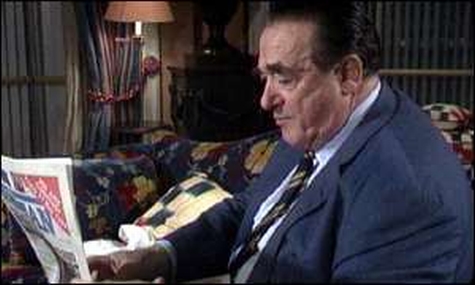
Robert Maxwell, UK libel law’s most famous beneficiary
If I had to choose my all-time favourite bill ever passed by the New York State Legislature (a worthwhile way to spend an afternoon if ever there was one), it would have to be the “Libel Terrorism Protection Act”. The specific purpose of this bill is to stop Britain’s ‘rogue state’ libel laws from being used to undermine the constitutionally-protected right to freedom of speech in the state of New York.
Ironically, while the UK government allows our courts no jurisdiction over a murder committed overseas – even when the victim is a British citizen – it’s a different story when a book is published in a foreign country, which happens to offend someone with the time, inclination and (most importantly) cash to pursue their grievance in the UK courts.
The practice of ‘libel tourism’ relies on the fact that, with the internet, any book published anywhere in the world can be deemed to have effectively been published in the UK (and thereby fall under the jurisdiction of the UK libel courts) if it can be bought online and shipped to Britain. UK libel law famously places the burden of proof on the author/publisher of a work rather than on the plaintiff. A UK libel defendant is effectively guilty until proven innocent.
It’s also, I’m told, possible to defend a UK libel case successfully, yet still be left with massive legal costs to cover. Bringing a libel case can be very expensive, and is thus largely beyond the reach of ordinary citizens. So what we effectively have is a legal mechanism for allowing rich people and organisations to inflict crippling costs on anyone who says bad things about them, regardless of whether or not those things are actually true. During the 1970s and 1980s this mechanism was famously – and skillfully – exploited by the fraudster Robert Maxwell to suppress the many questions raised about his business deals. It was only after his somewhat mysterious death that the truth emerged. Perhaps the one saving grace of the law is that, at least in the UK, dead men can’t bring libel cases.
But with the advent of the internet, the phenomenon of ‘libel tourism’ gives the UK’s rapacious libel laws a global reach, and now pose such a threat to freedom of expression worldwide that foreign states are having to create legislation to protect their citizens.
The threat posed by ‘libel tourists’ is just one among a number of issues raised by a recent UN report on the state of human rights in the UK. Equally dangerous – if not more so, as we’ve been familiar with the libel problem for long enough to have at least some ways around it – is the Brown regime’s attempt to make it illegal for any former civil servant to say anything at all about their time in government, ever, without official permission from the state.
According to Craig Murray (ex UK Ambassador to Uzbekistan):
“The idea, of course, is that only the ministers’ version of truth will enter history. You can be confident that Jack Straw’s memoirs will not tell you that he instructed Richard Dearlove that we would use intelligence from torture, or that we colluded with torture and extraordinary rendition in Uzbekistan and elsewhere. You needed my memoirs for that. If Jack Straw had his way, I would not have been able to publish my book telling you the truth; in fact the new regulations were born directly out of Straw’s fury at Murder in Samarkand.”
In “Don’t Get Fooled Again”, I explore the ease with which deception and delusion can start to creep in – and go unchecked – once freedom of expression has been compromised. An effectively functioning society depends on the free flow of information. The quicker that serious systemic problems can be identified, and analysed, the quicker solutions can be found. Attacks on freedom of expression seriously hinder this process, with the result that, at the extreme (as in the Soviet Union and Communist China), a wholesale national disaster can unfold without those in power ever facing up to the reality of what’s going on – less still being held accountable.
Latest blurb for DGFA
All being well, this is the text that will actually appear on the cover!
Why is it that, time and again, intelligent, educated people end up
falling for ideas that turn out on closer examination to be nonsense?
We live in a supposedly rational age, yet crazy notions seem increasingly mainstream. New Age peddlers claim to cure Aids with vitamin tablets. Media gatekeepers stoke panic and regurgitate corporate press releases in the name of ‘balance’. Wild-eyed men in sandwich boards blame it all on CIA… Even the word ‘sceptic’ has been appropriated by cranks and conspiracy theorists bent on rewriting history and debunking sound science.
But while it may be easier than ever for nonsense to spread, it’s never been simpler to fight back….
Don’t Get Fooled Again offers practical tools for cutting through the claptrap and unravelling the spin – tackling propaganda, the psychology of deception, pseudo-news, bogus science, the weird cult of “Aids reappraisal”, numerous conspiracy theories (including the one about weapons of mass destruction in Iraq), and much more.
Richard Wilson’s book is user-friendly, enjoyable, shot through with polemic – and argues forcibly for a positive solution. Don’t be a cynic – be a sceptic!
What’s the harm in HIV/AIDS denial?
www.whatstheharm.net is a website devoted to highlighting the damage that can be done by bogus ideas.
“Not all information is created equal”, say the site’s creators. “Some of it is correct. Some of it is incorrect. Some of it is carefully balanced. Some of it is heavily biased. Some of it is just plain crazy. It is vital in the midst of this deluge that each of us be able to sort through all of this, keeping the useful information and discarding the rest.”
The website focuses on cases where a lack of critical thinking has had deadly results. One of the key case studies is a grim roll-call of HIV-positive AIDS denialists who have died after deciding to stop taking the anti-retroviral drugs that could have saved their lives.
In “Don’t Get Fooled Again” I look in detail at the roots of AIDS denialism, and the impact that it has had – not only on its adherents, but on the thousands who have been affected by the stranglehold that this bogus theory gained over AIDS policy in South Africa.
Power House PR
One of the great things about the net is being able to track down classic books that have long gone out of print – if they ever were available in the UK in the first place. I came across Susan B Trenton’s “The Power House” whilst following the trail of the infamous “Nurse Nayirah” – whose (now) widely-discredited testimony before the US Congress played a crucial role in swinging world opinion in favour of military action in the run-up to the 1991 Gulf War. Published the following year, in 1992, Trenton’s book follows the intriguing career of Robert Keith Gray, who headed up the global PR phenomenon Hill and Knowlton during the 1980s.
“The Power House” is these days quite hard to track down, but a flavour of it can be found in this article, which originally appeared in Washington Monthly. In “Don’t Get Fooled Again” I take a look at the PR firm’s Hill and Knowlton’s extraordinary track record, both before and after Gray, from the manufactured ‘controversy’ over scientific evidence linking smoking and cancer to its more recent activities representing a dizzying range of dictatorial governments from around the world.


 Richard Wilson's blog

