Posts Tagged ‘Don’t Get Fooled Again’
The barefoot scientist and the Great Leap Forward

One of the oddest cases I came across while researching “Don’t Get Fooled Again” was that of Trofim Denisovitch Lysenko, Stalin’s “barefoot scientist”, who must rank as one of the greatest fraudsters of the modern age.
Lysenko, an agronomist by training, first rose to prominence in the late 1920s, when the Soviet state newspaper Pravda credited him with “turning the barren fields of the Transcaucasus green in winter, so that cattle will not perish from poor feeding, and the peasant Turk will live through the winter without trembling for tomorrow”. He managed to hold sway over Soviet science for most of the next four decades, less because of his scientific abilities than for his talents in self-promotion – and for the ruthless way that he dealt with his enemies.
Lysenko managed to present himself as the embodiment of a Communist ideal, the “barefoot scientist”, a peasant genius whose expertise derived not, primarily, from books, but from his practical understanding of the problems facing the Soviet worker, born of his own toil in the fields. His theories were likewise very agreeable to the Communist authorities, both in spirit and in consequence. Lysenko argued that, just as human nature could – as the Soviets believed – be fundamentally remoulded by the application of Marxist-Leninist principles, so the nature of plants could be transformed by the application of Lysenkoism. Wheat could be “trained” to thrive under Arctic conditions, simply by soaking the seeds in freezing water. Lysenko also rejected as “bourgeois” the Darwinist idea that organisms of the same species would naturally compete for resources. He insisted that, on the contrary, crops that were sowed very close together – be they pea plants or apple trees – would in fact co-operate with each other, and thrive, through a kind of agricultural “class solidarity”. 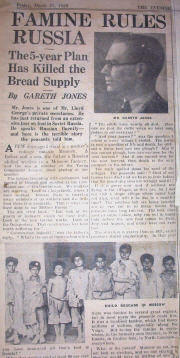
But there was one very big problem with these theories: they didn’t work. And when they began to be put into practice, lots of people starved. But the famines of the early 1930s seem to have done little to dent Lysenko’s reputation.
When statistical analysis by other Soviet scientists found no evidence to support his claims, Lysenko stepped up his use of inflammatory and politicised rhetoric. He declared that “mathematics has no relevance to biology – that is why we biologists do not take the slightest interest in mathematical calculations that confirm the useless statistical formulas of the Mendelists”. Lysenko rejected whole swathes of work as “bourgeois pseudo-science”, flatly denied the existence of genes as a bourgeois invention, and denounced geneticists as “fly-lovers and people haters”. In a speech before Stalin in 1935, Lysenko announced that “a class enemy is always an enemy whether he is a scientist or not”. “Bravo, comrade Lysenko!” came the response from the Soviet leader.
Over the next few years, Lysenko and his followers became increasingly vicious in their attacks on their fellow scientists. The geneticists Muralov, Meister and finally one of the country’s leading lights, Nikolai Vavilov, were arrested and jailed. Many others followed, with those who were not deliberately killed often dying in prison, as Vavilov did in 1943. Lysenko, meanwhile, was made President of the Lenin Academy of Agricultural Sciences, and subsequently became – ironically – head of the Institute of Genetics within the prestigious Soviet Academy of Sciences.
Lysenko’s influence in the USSR began to decline after the death of Stalin, but his ideas had begun to spread beyond the Soviet Union. China’s Mao Zedong, in particular, was inspired by the claimed successes of Lysenko’s theories in the USSR, and in 1958 sought to make them a key component of his “Great Leap Forward”. This was a plan to transform Chinese industry and agriculture, by the application of Communist principles, with the aim of economically surpassing the capitalist West within 15 years. Along with Lysenko ideas about “close planting”, Mao sought to impose the collectivisation of farming, and orchestrated a nationwide campaign to kill every sparrow in China. These measures failed disastrously – agricultural production plummeted Although the extermination of sparrows meant that there were fewer birds eating grain, there were also fewer birds eating locusts. Much of the food that had survived Mao’s efforts to revolutionise agriculture was devoured amid the worst Chinese locust plague in living memory. Historians estimate that more than 20 million people may have died before the Great Leap Forward was abandoned, in 1961. While Lysenko’s ideas were only one component of the disaster, they certainly will not have helped.
Lysenko’s downfall finally came in 1964, following a speech by the Soviet physicist Andrei Sakharov, at the General Assembly of the Soviet Academy of Sciences. Among Soviet scientists, physicists enjoyed a relatively priveleged position due to their importance to the country’s nuclear programme, and were thus one of the few groups able to speak openly. Sakharov accused Lysenko of being “responsible for the shameful backwardness of Soviet biology and of genetics in particular, for the dissemination of pseudo-scientific views, for adventurism, for the degradation of learning, and for the defamation, firing, arrest, even death, of many genuine scientists”. The dam had broken, and within months the Academy of Sciences carried out a damning investigation into Lysenko’s work, which largely destroyed his reputation.
Yet Lysenko’s fate was in sharp contrast to that of his victims. Where Vavilov and his fellow geneticists had been imprisoned or killed, Lysenko was allowed to live out a comfortable retirement, dying in relative obscurity in 1976.
Lysenko was very much a creature of the Soviet era, but he has many heirs. In “Don’t Get Fooled Again” I explore some of the parallels between Trofim Lysenko and his modern-day successors.
New York Times exposes undisclosed affiliations of news networks’ “military analysts”
I’m currently re-reading Nick Davies’s excellent book, “Flat Earth News“, a detailed investigation of distortion, manipulation and in some cases corruption within the media.
One acute issue is the extent to which TV and radio news channels routinely run interviews with people presented as an “analyst” or “consultant” on some issue or another, without any mention of the fact that this person has a direct vested interest. The classic example – and one that I look at in “Don’t Get Fooled Again” – would be the interviewing of a supposedly unbiased scientific expert about the health risks of smoking, without the public being told that he or she takes a regular “retainer” from the tobacco industry.
Since the early days of PR the use of this tactic has grown exponentially, most especially with the build-up to the Iraq war, and its aftermath. One mild example was the BBC Radio 4 Today Programme’s interview a few months back with the mysterious Canon Andrew White, an Anglican clergyman based in Iraq, who gave a rosy account of the situation there and bemoaned what he said was an overly negative view often presented in the media. No mention was made of the fact that the organisation Canon White founded – the “Foundation for Reconcilation and Relief in the Middle East” (FRRME) – has been heavily funded by the UK Ministry of Defence and various branches of the US government, along with the Orwellian “Iraqi Institute of Peace“, which the FRRME manages.
But this pales into insignificance alongside the exposé from the New York Times – highlighted on the Flat Earth News website – of the lengths the Pentagon has taken to co-opt retired US military officers as unofficial spokesmen for the administration, all the while presenting them as apparently neutral “military analysts” commenting on US policy in Iraq. A further corrupting factor was that many of these former high-ranking army officers had gone on to work for companies bidding for US government contracts for “reconstruction” in Iraq. Retired Lt Col Timur J Eads was one of a number who told the New York Times that they had often held their tongue when interviewed on air, fearing that “some four-star could call up and say ‘Kill that contract'”. Yet rarely, it seems, did the big US TV networks give the public any inkling that these “military analysts” had a clear financial stake in supporting the official US government line.
State-sponsored conspiracy theories – from China to Zimbabwe

Until I started researching “Don’t Get Fooled Again”, the typical image that sprang to mind when I thought about conspiracy theorists was that of the tin-hat wearing eccentric pictured here.
But one of the most striking things I found while writing the book was the extent to which conspiracy theories are often being disseminated not by lone “nuts” but by established governments.
The Chinese authorities have been at it recently, with a series of increasingly colourful claims about the nefarious global activities of the “Dalai clique” – but the prize of the month has to go to the ruling party in Zimbabwe, who have published several documents, including a letter ostensibly signed by Gordon Brown, detailing a conspiracy involving the British government, the German Central Bank and the Zimbabwean political opposition to invade the country, oust Robert Mugabe, and restore the old white-supremacist state of Rhodesia. Justice minister Patrick Chinamasa reportedly insisted he would stand by the allegations even if the documents were shown to be fake, because “even if Brown hadn’t put it in writing, everyone knows that is what the British are plotting”.
From “Titanic Express” to “Don’t Get Fooled Again”
“Don’t Get Fooled Again” is a very different kind of book from “Titanic Express”, but there are some common elements. Both, in their own ways, centre around a search for the truth, personally and politically. Both also look at how we can distinguish what’s true from what isn’t – or at least how we can tell a reasonable assumption from a completely nonsensical one – and why it is that these things matter. And both look in some detail at the issue of conspiracy theories, and the damage they can do.
In “Titanic Express”, the conspiracy theories I came across were often all-encompassing – so much so that at one point I was told that my sisters’ killers suspected me of being part of some devilish global plot to discredit them. And in “Don’t Get Fooled Again”, many of the most disturbing delusions I looked at – such as the belief that HIV doesn’t exist or is harmless, seemed ultimately, again, to rest on the belief in some conspiracy or another. What I wasn’t able to do in “Titanic Express” was to look in detail at the features that define a conspiracy theory, what it is, psychologically, that attracts us to such ideas, and the tools that we can use to unravel them – so it was great to have a chance to go into these questions a bit more in DGFA.


 Richard Wilson's blog