New statement from Amnesty: “There were 15 reported deaths”
The day after the BBC backed down in the face of legal threats from Trafigura over their claim that the company’s waste caused deaths…
In August 2006, toxic waste was brought to Abidjan on board the ship Probo Koala, which had been chartered by oil-trading company, Trafigura.
This waste was then dumped in various locations around the city, causing a human rights tragedy. More than 100,000 people sought medical attention for a range of health problems and there were 15 reported deaths.
On 23 September 2009, the High Court of England and Wales approved a $45 million settlement between nearly 30,000 victims of the toxic waste dumping and Trafigura.
Index and PEN condemn BBC climbdown
From Index on Censorship
Index on Censorship and English PEN today have expressed dismay that the BBC has conceded the libel action brought by toxic waste shippers Trafigura in the High Court. We believe this is a case of such high public interest that it was incumbent upon a public sector broadcaster like the BBC to have held their ground in order to test in a Court of law the truth of the BBC’s report or determine whether a vindication of Trafigura was deserved.
The case was brought by Trafigura after the BBC claimed in its Newsnight programme of 13 May 2009 that Trafigura had caused deaths by being involved in the dumping of toxic waste in Abidjan in the Ivory Coast.
The United Nations Special Rapporteur Prof Okechukwu Ibeanu concluded in a report on 3 September 2009 that:
“On the basis of the above considerations and taking into account the immediate impact on public health and the proximity of some of the dumping sites to areas where affected populations reside, the Special Rapporteur considers that there seems to be strong prima facie evidence that the reported deaths and adverse health consequences are related to the dumping of the waste from the Probo Koala.”
Read here
Trafigura has paid out $200 million to the government of the Ivory Coast, and in London settled for £30 million a joint action made by 31,000 Ivorians.
But the BBC has now apparently conceded that the toxic waste dumped by the Probo Koala did not cause deaths, serious or long-term injuries and retracted their Newsnight piece in full and removed all reports from their web site.
English PEN and Index on Censorship believe that costs were a major factor behind the BBC’s decision. According to a leading media lawyer, Mark Stephens of FSI, the cost of such a case would have been in excess of £3 million. In its statement the BBC said:
“The BBC withdraws the allegation that deaths, miscarriages or serious or long-term injuries were caused by the waste and apologises to Trafigura for having claimed otherwise.”
John Kampfner, CEO of Index on Censorship said:
“Sadly, the BBC has once again buckled in the face of authority or wealthy corporate interests. It has cut a secret deal. This is a black day for British journalism and once more strengthens our resolve to reform our unjust libel laws.”
Jonathan Heawood, Director of English PEN, said:
“Forced to choose between a responsible broadcaster and an oil company which shipped hundreds of tons of toxic waste to a developing country, English libel law has once again allowed the wrong side to claim victory. The law is an ass and needs urgent reform.”
UK’s dysfunctional libel system strikes again? Newsnight feature on Trafigura disappears from BBC website
UPDATE – The censored Newsnight feature on Trafigura may have disappeared from the BBC website, but it’s now all over Youtube…
The BBC lawyers may have caved, but you can still defy Trafigura – click here to find out how!
In May, the BBC ran a feature on the oil company Trafigura, alleging “dirty tricks” over the dumping of toxic waste in the ivory coast. Shortly afterwards, Trafigura announced that they were sueing the BBC for libel.
The case has received very little media attention – a sign, perhaps, of the ongoing chill that Trafigura is managing to cast over the UK media – but it was mentioned again in this Guardian piece last month.
Until very recently, the Newsnight feature was freely available on the BBC’s website – but now it seems to have disappeared. It’s currently still available via Google cache, which indicates that it was on the site as late as lunchtime yesterday. Could of course just be a technical problem but it does look somewhat odd…
UPDATE 11/12/09 – The story has now been missing from the website for more than 24 hours – it’s starting to look more and more likely that the piece has been spiked, and that the BBC – that most British of institutions – may now have become the latest victim of our country’s “rogue state” libel laws. In an ironic twist, it seems that the BBC’s lawyers chose international Human Rights Day as the moment to cave in to this attack on freedom of expression.
Libel reform campaign launches in Parliament
Time to reign in the rogue libel outfits?
I was gutted to be missing this event due to ongoing winter lurgee – but delighted to see that Malcolm Grant, provost of my old college UCL, was the first university head to sign up to the campaign:
A university leader has thrown his weight behind a campaign to reform England’s libel laws amid growing concern about so-called “libel tourism” and its impact on academia.
Malcolm Grant, provost of University College London and a trained lawyer, told Times Higher Education that the current laws were having an impact beyond Fleet Street and were stifling scientific debate and academic freedom.
“It is fundamental and critically important that the threat of libel law be lifted from scientific dispute,” he said, describing it as “quite chilling” that the laws were being used to threaten scholars with heavy financial penalties for making simple points about science.
Professor Grant is joining representatives from science, journalism, publishing and the literary sector this week to launch a new petition for libel-law reform, organised by the charity Sense About Science, the free-speech organisation Index on Censorship and English PEN, which represents authors.
He said: “There are not many vice-chancellors who are lawyers, and I am heading up a very strong science university, so I think it is important to be involved.”
The petition calls for “major reforms” of the English libel laws, saying they “inhibit debate” and “stifle free expression”.
Democracy under attack – Carter-Ruck persuades Commons Speaker that courts *can* ban the reporting of Parliament
Can anyone Stop the Ruck?
When, following the recent fiasco around Trafigura, I saw Carter-Ruck partner Andrew Stephenson at a Parliamentary committee meeting, he seemed utterly unrepentant.
Carter Ruck’s attempt, on behalf of Trafigura, to ban the media from reporting a question in the British Parliament, had triggered calls for the company’s Directors to be dragged to the bar of the House of Commons and formally reprimanded. Justice Minister Bridget Prentice had reiterated that the 1688/9 Bill of Rights gave the media an absolute privelege to cover the proceedings of Parliament, and that this was essential for the effective functioning of our democracy.
In seeking to explain his firm’s behaviour to the Joint Parliamentary Committee on Human Rights, Stephenson certainly appeared defensive, but he didn’t seem in the least bit sorry. He did, though, seem keen to reassure us that the injunction secured by his company on Trafigura’s behalf had been intended merely as an interim holding measure, and that the original purpose had never been to gag the reporting of Parliament.
So it seems very surprising to read in today’s Sunday Times that Stephenson appears to have gone out of his way to persuade the Commons authorities that the law does, after all, allow for the gagging of Parliamentary procedure:
In a submission to a Commons select committee, Carter-Ruck, a law firm that specialises in libel, argues that newspapers and publishers would be in contempt of court if they published parliamentary questions, answers or debates that fell under super-injunctions.
Advisers to John Bercow, the Speaker, are understood to have informed the culture, media and sport committee that Carter-Ruck’s position is correct. MPs regard the position as a serious threat to free speech and the proper functioning of democracy.
Super-injunctions — under which even reporting the existence of the injunction is banned — are increasingly being used to stop the media publishing information. MPs are now concerned that they threaten the media’s right to report what MPs can freely say in parliament, a privilege affirmed in the Parliamentary Papers Act of 1840…
At the time of the disagreement, Bridget Prentice, the justice minister, said Carter-Ruck was wrong to claim super-injunctions applied to the reporting of parliamentary proceedings.
However, in a submission to the culture committee published last week, Andrew Stephenson, a senior partner at the firm, said the minister was under a “misapprehension”.
He said that while MPs were guaranteed the right to free speech under the 1688 Bill of Rights within the House of Commons, the reporting of parliament remained subject to court orders.
The Speaker’s counsel declined to comment, but is understood to agree with Stephenson’s assessment.
Thus it appears, after all, that Parliamentary democracy is still under attack, and that Carter-Ruck may be making headway in their attempt to overturn a centuries-old democratic freedom.
What I think this demonstrates, again, is that Carter-Ruck is not just an ordinary law firm, doing what ordinary law firms do. They are actively engaged in lobbying the government to curtail our liberties in the interests of their clients. They are behaving, in other words, like a right-wing activist group.
Presumably if the goverment takes this issue seriously enough, they will table emergency legislation which makes the absolute right to report Parliament fully explicit. In the meantime, judges could ensure that any secret injuction they do grant includes a statement spelling out that the measure does not apply to the reporting of Parliament.
As I’ve argued elsewhere, there’s also a pretty clear-cut ethical case for (peaceful, legal) direct political action against Carter-Ruck. The idea that a lawyer – or indeed any other worker – should be exempted from the moral consequences of their professional choices is, in my view, a self-serving myth.
Lawyers who seek to apply an unjust law – be that the law that jailed Oscar Wilde or the laws being used today to suppress freedom of speech – don’t evade moral accountability simply by hiding behind the fact that what they’re doing is ‘legal’. I can’t help but wonder if we might have avoided some of the trouble we’re now in if more had been done to challenge unethical companies like Carter-Ruck at an earlier stage.
But lastly, there has to be a question here about practicality. However much Carter Ruck and their corporate clients might like to suppress free speech through the use of one secret injunction after another, the recent Twitter-storm around Trafigura has shown that this can sometimes be impossible in practice.
If Carter-Ruck are right and Bridget Prentice is wrong, then it seems that I may, after all, have been in contempt of court when I posted the ‘banned’ Parliamentary Question on Twitter back in October. Would I be willing to do so again? I wouldn’t rule it out. And it strikes me that now would be a good time to get a head-count of bloggers and Tweeters prepared to consider engaging in peaceful civil disobedience should Carter-Ruck – or anyone else – attempt to gag the reporting of Parliament again. You can leave a comment here or email me via richardcameronwilson AT yahoo DOT co DOT UK.
The HIV patient who died after his denialist “friend” persuaded him to stop taking his medications
Of all the tragic individual stories I’ve come across recently about the impact of AIDS denialism, this has to be among the very saddest:
From Denying Aids
Maniotis claims that Lambros was like a brother to him. With such brothers, who needs enemies? The two men became friends, and Maniotis visited Lambros often in the last few years, his influence growing stronger and stronger, ultimately convincing him that HIV did not exist. Lambros stopped taking his medication and the result was devastating. After his death, Lambros’s family and friends found his medication in his refrigerator, untouched since 2007. Instead of his life-saving doctor prescribed medicine, Lambros was convinced to consume Maniotis-promoted vitamins…
HIV ultimately landed him at Howard University Hospital under unclear circumstances. The most likely scenario is that he was found confused and disoriented and was taken to the closest emergency room. He had developed encephalitis, a common outcome of end-stage HIV infection. He was later transferred to Georgetown Hospital, where he died of encephalitis. During his more lucid moments at the hospital, Lambros told his friends he was dying of AIDS…
BBC Newsnight are still being sued for libel by Trafigura and Carter-Ruck
From The Guardian
Carter Ruck’s support today for some of the changes put forward in the report came amid continuing criticism of firms that launch expensive libel claims against journalists and other publishers, often using conditional fee agreements which result in higher costs for defendants.
“If we don’t get reforms, what is there to stop a law firm like Carter Ruck bombarding journalists and suppressing information that is in the public interest for three years?” said Meirion Jones, producer at BBC’s Newsnight, which is currently being sued over its reporting of oil trading firm Trafigura.
“Skeptical Voter” launches today…
From Skeptical Voter
NB – I should say that pretty much all the really difficult aspects of this project, including the writing of the press release below, were sorted out by the outstanding duo Craig Lucas and James O’ Malley!
Politicians to be asked for evidence of their commitment to evidence
New Skeptical Voter project hopes to hold MPs and candidates views on evidence-based policy to account
Author and campaigner Richard Wilson today launched a new campaign to hold to account the views of MPs and candidates standing at the next General Election with regard to ‘evidence-based policy’. ‘Skeptical Voter’ is an apolitical grassroots project by the ‘skeptic’ community – those who have a scientific worldview who believe that evidence should be at the centre of all public policy making. The Skeptical Voter website intends to identify which parliamentary candidates embrace the use of evidence as a means to inform their decisions and which prefer to obfuscate, ignore or suppress the evidence for political convenience.
Today sees the launch of phase one of their plan – Richard is asking for contributions to a collaborative ‘wiki’ on the website and for suggestions for questions to ask to MPs – the best of which will be put into a survey that will be sent to all 2010 General Election candidates.
Speaking about the project, Richard said, “It’s based on two principles and a hypothesis: The first principle is that everyone has a right to know where their MP stands on things like the role of scientific advisors, spending NHS cash on so-called ‘alternative’ treatments like homeopathy and the role of the libel laws in scientific discussion. The second principle is that MPs who stand on the wrong side of these issues ought to be held to account. Our hypothesis is that there are enough of us out there to make a splash if we get organised.”
Those wishing to get involved, or find out more information can go to the Skeptical Voter website at http://www.skeptical-voter.org
Are your taxes subsidising the libel tourism industry?
Yesterday I wrote about a discussion in Parliament on the use of “super-injunctions” to gag the media. It turns out that no-one anywhere is keeping track of how many of these secret gags are being issued, or whether the judges involved are scrutinising the cases properly.
But another intriguing issue that came out of the same meeting relates to the problem of “libel tourism”. Notoriously, under current UK law it’s now possible for anyone, anywhere in the world, who thinks they’ve been libelled on some website or another, to come to London and attempt to bankrupt the person responsible. Thus we have – for example – an Icelandic academic losing his home after being sued by a fellow-Icelander over things written on the University of Iceland website.
“Libel tourists” come here because it’s easy to win, even when you don’t have a case. The UK court system denies libel defendants a fair trial by effectively treating them as ‘guilty until proven innocent’, and because the legal costs of defending one’s self are up to 140 times higher than in other countries. This means that most ordinary people cannot afford adequate legal representation.
Those who really benefit from this system are, of course, law firms such as Carter Ruck, who help foreign libel tourists bring their exorbitant claims. What I wasn’t aware of until this week is that the UK taxpayer may also be helping to foot the bill. While the parties to the case pay lawyers’ fees, it was claimed during Tuesday’s meeting that the costs of actually running the court, paying the judges wages etc. comes out of the public purse. If this is true, then not only are the likes of Carter Ruck making a fortune from these questionable foreign law suits – but we are indirectly subsidising the whole process through our taxes….
Secret injunctions: Ruck knows how many of them are out there

“There are known knowns. These are things we know that we know. There are known unknowns. That is to say, there are things that we now know we don’t know. But there are also unknown unknowns. These are things we do not know we don’t know.”- Donald Rumsfeld, 12 Feb 2002
On Tuesday I joined a meeting of the UK Parliament’s Joint Committee on Human Rights which focussed on “super-injunctions”. This is the name given to a legal order which not only bans a particular issue from being covered in the press, but also bans any reference to the ban.
It was one of these orders that had, notoriously, been used by controversial law-firm Carter Ruck, on behalf of oil-trader Trafigura, to suppress coverage of the now-famous “Minton report”, until the ban was circumvented by the online media. It was this that stirred the interest of the JCHR.
The meeting included journalists, editors, MPs, Lords and lawyers, including both the Guardian’s legal chief and two senior partners from Carter Ruck. The discussion was so wide-ranging that it would take more than one blog post to do it justice, but there were a couple of details that really stood out.
The first is that no-one knows how many secret super-injunctions are currently in force. While the UK state seems bent on meticulously recording every detail of its citizens’ phone, email and web-browsing habits, it is positively lackadaisical about tracking its own media gagging orders. Although each individual super-injunction is (we have to hope) being kept on file somewhere by the judiciary, no-one, anywhere, is collating information about the overall picture.
When asked about this issue in Parliament, the government’s response was simply that:
“The information requested is not available. The High Court collects figures on applications, however injunctions are not separately identifiable, and there are currently no plans to amend databases to do so.”
So there’s no way of knowing, on a global scale, how many of these gagging orders are being handed out, or for what sorts of purposes, or on whose behalf. It’s thus difficult to see how anyone could independently verify that the law is actually being applied fairly and proportionately. What we effectively have is a secret state whose bans on media coverage are almost entirely beyond public scrutiny.
Individual newspapers will obviously know how many injunctions they’ve each received (the Guardian has reportedly had 12 this year alone), but as they’re forbidden from discussing the details, it will be impossible for newspaper editors to build up a global picture by talking to each other.
This lack of scrutiny seemed to be a real concern for members of the Committee, and there was much discussion about how they could determine the size of the problem and address it. One point I tried to make was that there is at least one group of people who could in theory tell us quite a lot about the number of super-injunctions being issued – the law firms like Carter Ruck who are involved in securing them.
At the moment we seem to have a situation where the only people who have any idea of about the numbers, are the same people who are profiting so handsomely from the UK libel/censorship system.
The second thing that stood out for me in the meeting was a discussion around “libel tourism”. It seems that our taxes may be helping to subsidise the activities of Carter Ruck, Shillings and their ilk, in this area. But more on that next time…
Trafigura coverage still curtailed by libel abuse. UK media unable to report freely on deaths allegedly caused by dumping of Trafigura’s toxic waste

*Update* See also: Doc Richard – Trafigura suppresses scientific lecture – allegedly
*Update 2* Rebellion spreads – Caroline Lucas MEP mentions the unmentionable.
There’s renewed coverage today of the ongoing legal battles following the notorious Ivory Coast toxic waste incident, in which the oil trader Trafigura has been implicated.
The Guardian (UK), Times (UK) and New York Times (US) all report that the £30 million compensation payment by Trafigura to victims of the disaster is in danger of being misappropriated after an Ivorian court ordered that the funds be frozen.
But note also the contrast in how the UK and US media have reported the background to the story. Here’s how the New York Times covers it:
The waste was shipped by Trafigura, an international commodities trading giant. About 108,000 people sought treatment for nausea, headaches, vomiting and abdominal pains, and at least 15 died. All had apparently been poisoned by the toxic brew of gasoline and caustic soda, refining byproducts dumped by Trafigura’s contractor.
Here’s the Guardian:
Hundreds of tonnes of sulphur-contaminated toxic oil waste were cheaply dumped on landfills and in ditches around Abidjan in 2006. The cargo ship had been chartered by Trafigura. In the weeks after, the fumes caused thousands of sick people to besiege local hospitals.
…and here’s the Times:
A cargo ship chartered by Trafigura dumped hundreds of tonnes of sulphur-contaminated toxic oil waste around Abidjan in 2006. In the following weeks the fumes caused thousands of people to need hospital treatment.
The deaths of “up to 17” Ivorians has been widely reported elsewhere. In previous articles, both the Times and the Guardian have referred to a UN report citing “official estimates” of 15 dead. So it seems odd that this seemingly crucial detail should now be omitted.
The New York Times is of course free to say what it likes because freedom of speech is protected under the US constitution, and New York State has a law which specifically prohibits the enforcement of UK libel judgements in NY, due to human rights concerns.
Fortunately in the UK we do still have (despite some recent confusion) an absolute right to report the proceedings of Parliament, so I can draw your attention to this recent statement from Evan Harris MP:
My understanding is that “Newsnight” is being threatened by the lawyers for Trafigura, Carter-Ruck, if it repeats an allegation… that deaths were caused by the dumping of toxic waste in Ivory Coast, even though in 2007 Hansard reported the Transfrontier Shipment of Waste Regulations laid by the Department for Environment, Food and Rural Affairs before Parliament, and a memorandum of explanation to those regulations stated:
“The recent example of the release of toxic waste in the Ivory Coast leading to the deaths of a number of people and the hospitalisation of thousands underlines the risks involved in the movement and management of waste.”
How can it be that that can be in Hansard, yet there are still threats of legal action against “Newsnight” if it reports the very same wording that is used in there? That cannot be right.
What Dr. Harris could also have mentioned is that, astoundingly, alongside these renewed threats, Trafigura’s libel action over this damning May 2009 news report, appears still to be ongoing.
Guardian editor accuses Carter-Ruck of “prolonged campaign of legal harassment”
From www.parliament.uk
Culture Media and Sports Committee: Further written evidence from Alan Rusbridger, the Guardian
…Along with others of the European media and the BBC, we have recently been subject to what we regard as a prolonged campaign of legal harassment by Carter-Ruck on behalf of London-based oil traders, Trafigura.
Trafigura arranged the illegal dumping of 500 tons of highly toxic oil waste in the West African country of Cote d’Ivoire. Thousands of the population of Abidjan, the capital, subsequently became ill and, after a bitterly fought law suit, Trafigura has now been forced to pay a degree of compensation to the victims.
Carter-Ruck, like such other firms as Schillings, are trying to carve out for themselves a slice of the lucrative market known as ‘reputation management’. This is not about the perfectly proper job of helping people or organisations gain legal redress when they have been mistreated by the press.
It is a pitch to work with PR firms to pressurize and intimidate journalists in advance on behalf of big business. It exploits the oppressive nature and the frightening expense of British libel laws…
After the toxic waste dumping in 2006, Trafigura embarked on what was essentially a cover story. They used Carter-Ruck and PR specialists Bell Pottinger, working in concert to enforce their version on the media.
The cover story was that Trafigura used a tanker for normal ‘floating storage’ of gasoline. They had then, they claimed, discharged the routine tank-washing ‘slops’, which were harmless, to a disposal company, and had no responsibility whatever for the subsequent disaster.
In fact, Trafigura had deliberately used a primitive chemical process to make cheap contaminated gasoline more saleable, and knew the resultant toxic waste was impossible to dispose of legally in Europe.
The Guardian experienced an intimidatory approach repeatedly in the Trafigura case. Other journalists at BBC Newsnight, the Norwegian state broadcaster NRK and the Dutch newspaper Volkskrant, told us of identical threats. The BBC eventually received a libel writ. NRK were the subject of a formal complaint – eventually rejected – to the Norwegian press ethics body.
A history of Carter-Ruck’s behaviour in respect of the Guardian is appended [APPENDIX 2]
On 27 June 2008, Bell Pottinger sent a threatening message to the Guardian. They had previously sent similar threats and complaints to AP, whose agency dispatch had been published on-line by the Guardian. The message ended:
“Please note that in view of the gravity of these matters and of the allegations which have been published, I am copying Trafigura’s solicitors, Carter-Ruck, into this email.”
The letter demanded changes to the Guardian’s website to include this information:
“The Probo Koala … left Amsterdam with the full knowledge and clear approval of the Dutch authorities.” It also stated that the disposal company in Amsterdam had asked for extra fees “without any credible justification” and that “ship’s slops are commonly produced within the oil industry. To label Trafigura’s slops as ‘toxic waste’ in no way accurately reflects their true composition.”
On 16 September 2008, Trafigura posted a statement on their website claiming:
“Trafigura is in no way responsible for the sickness suffered by people in Abidjan … The discharge of slops from cargo vessels is a routine procedure that is undertaken all over the world.”
The company knew this was a misleading and false statement.
On 22 September 2008, the Guardian’s East Africa correspondent, Xan Rice, asked Trafigura some questions, in view of the then impending trial of local Ivoirian waste contractors.
Trafigura refused to answer, a refusal coupled with another pointed referral to libel solicitors. Bell Pottinger wrote: “I am copying this email to Carter-Ruck”.
Xan Rice’s article was not published by the Guardian.
The Ivoirian trial convicted local individuals for toxic dumping, Trafigura subsequently abandoned some of their lines of defence in the English litigation they originally claimed they had no duty of care, and could not have foreseen what the local dumpers might do. Trafigura now agreed instead, to pay anyone who could prove the toxic waste had made them ill. They continued to deny publicly that such a thing was possible.
Xan Rice again asked some factual questions. On 14 November 2008, Bell Pottinger responded “Please note that I am copying this correspondence to Carter-Ruck and to the Guardian’s legal department”. They added: “Any suggestion, even implicit, that Trafigura … should have stood trial in Ivory Coast would be completely unfounded and libellous … We insist that you refer in detail to the contents of the attached summary”.
They claimed to be sueing for libel the senior partner of Leigh Day who was bringing the English lawsuit. They added that further Leigh Day statements “are the subject of a complaint in Malicious Falsehood”[sic]. In fact, the libel proceedings against Martyn Day had been stayed, and no malicious falsehood proceedings had been – or were ever – issued.
A closely-typed six-page statement was attached. In it the company claimed to have “independent expert evidence” of the non-toxicity of the waste, but refused to disclose it. Trafigura repeated the false claim that the waste was merely “a mixture of gasoline, water and caustic soda”.
No Guardian article, once again, was published.
On 3 December 2008, less than 3 weeks later, Trafigura formally admitted to the High Court the true composition of the waste in its document “Likely chemical composition of the slops”, [detailed above].
On 5 December 2008, Trafigura formally admitted their waste came from Merox-style chemical processing attempts, and not from routine tank-rinsing.
On 29 April 2009, Carter-Ruck wrote to a Dutch paper: “Trafigura has been obliged to engage my firm to bring complaints against Volkskrant … It is indeed the case that we have on Trafigura’s behalf, written to a number of other media outlets around the world in respect of their coverage of this matter”. Bell Pottinger also confirmed contact with journalists who published or broadcast stories that did not accurately reflect Trafigura’s position, but added: “We completely disagree with your description of Trafigura’s involvement in an ‘aggressive media campaign’.”
On 13 May 2009, Bell Pottinger, in concert with Carter-Ruck, issued a statement to the BBC repeating two assertions known to be false.
They said the Leigh Day statement “is currently the subject of a malicious falsehood complaint made by Trafigura”. They also claimed once more: “The Probo Koala’s slops were a mixture of gasoline, water and caustic soda”.
On 13 May 2009, Carter-Ruck wrote to the Guardian demanding the paper not “publish any reference” to witness-nobbling allegations, although they know these had already been the subject of a public statement by solicitor Martyn Day; the subject of a separate disclosure published by the legal correspondent of the Times; and the subject of a publicly-available court injunction banning further witness contact by Trafigura until trial. Carter-Ruck added that “so much as a reference to these allegations” would be “wholly improper”.
On 15 May 2009, Carter-Ruck issued a press release under its own letterhead, not Trafigura’s, claiming that High Court libel proceedings had been issued against the BBC for “wildly inaccurate and libellous”, “one-sided”, “misleading”, “sensationalist and inaccurate” publications.
On 22 May 2009, Carter Ruck told the Guardian: “It is untrue that the slops caused or could have caused the numerous deaths and serious injuries … Trafigura cannot be expected to tolerate unbalanced and inaccurate reporting of this nature. Accordingly, Trafigura requires the Guardian to … remove these articles from its website forthwith; and … publish a statement by Trafigura”.
The Guardian declined to remove its articles, but agreed to publish the statement. This said: “The fact is that according to independent analyses that Trafigura has seen of the chemical composition of the slops, it is simply not possible that this material could have led to the deaths and widespread injuries alleged. Similarly, it is not possible that hydrogen sulphide was released from the slops as alleged by the Guardian. Trafigtura will present these independent analyses in the High Court in Aututmn 2009.”
On 17 September 2009, the Guardian published documents on its front page detailing a “massive cover-up” by Trafigura.
On 29 September 2009, Trafigura announced it would pay £30m to the victims, rather than face a High Court trial.
Al Jazeera’s “Listening Post” on Trafigura and Carter Ruck
I’ve long been a fan of Al Jazeera’s willingness to cover stories and angles that other news media won’t touch, and was pleased to have the chance to contribute to the programme above. I was even more pleased when I saw how it had turned out – definitely one of the best overviews of the story that I’ve yet seen.
UPDATE …on a free speech tangent, the techie guerilla campaign against the litigiousness of UK chiropractors continues with a sneaky pop at the General Chiropractic Council.
Newsnight being threatened by Carter-Ruck for reporting Hansard proceedings
See also: “Trafigura coverage still curtailed by libel abuse”
From Theyworkforyou
Evan Harris MP: My final question relates to the ongoing problems of English libel law in respect of Trafigura. My understanding is that “Newsnight” is being threatened by the lawyers for Trafigura, Carter-Ruck, if it repeats an allegation against Carter-Ruck that deaths were caused by the dumping of toxic waste in Ivory Coast, even though in 2007 Hansard reported the Transfrontier Shipment of Waste Regulations laid by the Department for Environment, Food and Rural Affairs before Parliament, and a memorandum of explanation to those regulations stated:
“The recent example of the release of toxic waste in the Ivory Coast leading to the deaths of a number of people and the hospitalisation of thousands underlines the risks involved in the movement and management of waste.”
How can it be that that can be in Hansard, yet there are still threats of legal action against “Newsnight” if it reports the very same wording that is used in there? That cannot be right. Although there are powerful interests at stake, there is a public interest in the fact that there was a settlement made—hundreds of millions of pounds paid over in that settlement—and yet the public in this country are not allowed to know some of the contents of those news reports. We have a responsible media by and large in respect of such matters, and it is about time that English libel laws and English laws in general caught up with that fact.
Trafigura have allegedly been threatening individual Greenpeace staff with legal action
From The Guardian
In the debate today Harris said it was his understanding that BBC Newsnight were also being “threatened” by Carter-Ruck if they repeated a claim, even though it was recorded in parliamentary Hansard. He said: “How can it be that that can be in Hansard, yet there are still threats of legal action against Newsnight if they report the very same wording that is used in there? That cannot be right.”
Speculation is growing over what in Hansard Evan Harris was referring to. I’m wondering if it might be this:
From Hansard
Mark Stephens…. We are seeing at the moment a real problem with a company called Trafigura who have retained lawyers to attack Green Peace International predominantly, but also media organisations who are reporting about the alleged toxic dumping in Africa of waste. They are doing this in a number of ways. Letters are being sent; they are suing the lawyers, Leigh Day, who are taking claims; I understand that Leigh Day are representing 16 people who died, 100,000 people who needed medical attention, including miscarriages, respiratory problems and organ failure, and there is a class of about 30,000 Ivorians who have suffered as a result of this toxic dump. It seems to me that it is wholly inappropriate for a very wealthy company to try and chill down discussion about toxic dumping through this kind of aggressive behaviour. For example, there are threats to individuals at Green Peace International; and there are also threats, for example, to the BBC. If the BBC want to get a balanced story and hear from Trafigura, on the one hand, and also someone from Green Peace International or a scientific expert, the threats to the BBC are being communicated back via the producers who are saying to the people from Green Peace, “But of course you can’t mention this, this, this, this and this because otherwise we might get into a defamation wrangle with Trafigura”. That seems to me just plain wrong. Let us have an open debate about it.
MPs to debate libel abuse and freedom of speech tomorrow

CarterRuck have already contacted your MP to give their views on libel, ahead of tomorrow’s debate on freedom of speech. Now’s your chance to give yours: www.tr.im/Cl3D
Self-censorship
I thought it was about time I published this. Readers should know that I dispute several of the assertions made by Breco in the message below, and am very doubtful about many others. You should also be aware that since the email was sent to me, this happened, and this happened.
But aside from the content of the letter, the point is that the intimidation worked, at least for a while. I have not written anything of substance about Bredenkamp since I got this email, or done any further investigation. The reason for this is simply and solely that Bredenkamp is a multi-millionaire and I’m not. Due to the astronomical costs built into the UK libel system, and the massive advantage this gives to super-rich litigants, should someone like Bredenkamp decide to sue me, I would not be able to afford adequate legal representation. This would essentially guarantee that I would not receive a fair trial.
From: “******@breco.info” Friday, 29 June, 2007 9:11:53
To: richardcameronwilson@yahoo.co.uk
Dear Mr Wilson
I refer to your article Titanic Express as published on http://www.ukwatch.net (“The Article”). The circumstances of your sister’s death are truly appalling and tragic. By all accounts, she was a remarkably courageous and altruistic person and your desire to honour her memory by writing her story is laudable.
However, it is very disappointing to see that in the Article you make a number of incorrect and damaging statements about Mr John Bredenkamp.
1. You write in the Article: “Successive UN reports have implicated dozens of western companies in illegal profiteering from the DRC war, which is intimately connected to the Burundi conflict. Those named include the UK-based Zimbabwean arms dealer John Bredenkamp and Andrew Smith, the British owner of the “air cargo firm” Avient”.
• The UN Reports you mention refer to the UN Panel of Experts on the Illegal Exploitation of Natural Resources of the DRC. Mr Bredenkamp was indeed wrongly named in one interim report and subsequently proved to the UN that the unsubstantiated allegations made about him were misconceived and false. In their Final Report of 25 November 2003 –nearly four years ago – he was totally exonerated by the UN of any wrong doing or unlawful activity.
• Mr Bredenkamp is not based in the UK neither is he ‘an arms dealer’. If you visit his web site, you will see that his involvment in the defence sector is as a passive shareholder in Aviation Consultancy Services (“ACS”) , a company which has agencies in Southern Africa for a number of reputable international aircraft manufacturers.
2. You go on to write in the Article: “To date the UK has proved reluctant to follow up the UN’s allegations, but Bredenkamp’s offices were raided by the Serious Fraud Office last year as part of the BAE corruption inquiry. One more reason to hope that CAAT succeeds in getting the inquiry reopened is that it may help shed some much-needed light on Bredenkamp’s business dealings.”
The fact is that there are no outstanding UN allegations in respect of
Mr Bredenkamp or his companies for the UK to follow up. He himself suggested to the Panel that his DRC joint venture should be monitored by the OECD, a process that was duly put in place. Furthermore, at the time of their Final Report, you should know that the UN urged him to remain invested in the DRC.
In respect of the SFO’s inquiries into media allegations about BAE Systems, let me make two points:
o there is no connection whatsoever with the UN Report in this enquiry.
o Mr Bredenkamp voluntarily flew to the UK late last year to offer his assistance to the SFO after they had visited his UK office and London house.
As regards his business dealings, please do visit the Breco web site http://www.breco.info to get an idea of what he really does rather that what the media or CAAT would have you believe.
I note that in your book Titanic Express (“The Book”), on page 142 you write in the Book: “And John Bredenkamp, a British-based Zimbabwean businessman with, according to the UN, ‘a history of clandestine military procurement,’ was accused of breaching European Sanctions by supplying British Aerospace equipment to the Zimbabwean forces fighting in the Congo.”
As previously stated, Mr Bredenkamp is not British-based.
The source of the accusation you refer to was an article in the Sunday Telegraph newspaper which was totally erroneous. ACS comprehensively complied with EU sanctions on behalf of their principals and this was fully demonstrated to the UN Panel, who accepted that there had been no breaches whatsoever.
If, in the future, you decide to write about Mr Bredenkamp or any of his companies, I would greatly appreciate it if you would be courteous enough to contact the group’s online press office – press_office@breco.info – with a view to checking that your facts are correct.
Bearing in mind the background to your book, Mr Bredenkamp has decided not to take any legal action against you, but please understand that he is deeply wounded by all of your erroneous statements.
Sincerely
***** ******
Press Office
Breco Group
Carter Ruck and Trafigura have backed down…
14th September 2006
Waterson Hicks
130 Fenchurch Street
London
EC3 5LY
For the attention of Mark Aspinall
RE: Caustic Tank Washings, Abidjan, Ivory Coast
Dear Sir,
In accordance with your instructions of 7th September 2006 in connection with the above matter we
advise on the following issues:
“the chemical consistency of gasoline caustic washings, especially the nature of mercaptans”,
“the toxicity of such washings”,
“the correct method of disposal”,
“the environmental and health impacts of waste”.
This report is prepared on the basis of the limited information currently available to us and accordingly
our views may change in due course.
1. Introduction
2. Three cargoes of approximately 28,000mts of coker naphtha were loaded at Brownsville,
Texas by Mt Seapurha (20th March 2006), Mt Moselle (25th April 2006) and Mt Seavinha (1st
June 2006). All three vessels subsequently transferred their cargoes to Mt Probo Koala (11th
April, 19th May and 18th June respectively).
3. In order to reduce the sulphur content of these cargoes, on-board washing took place. To
each cargo, 50m3 of caustic soda (NaOH, 33% aqueous) and 8kg ARI-100 EXL catalyst
(Cobalt phthalocyanine sulphonate) was added. The mixture was circulated for 24hrs and
allowed to settle before the caustic solution was drained to the slops tanks. In order to ensure
complete removal, the bottom of the naphtha phase was also removed.
4. This process was found to have reduced the mercaptan sulphur content by approximately
47%, and the naphtha was subsequently used as blendstock to make finished gasoline.
5. The combined slops from these washing operations were reported as the following:
o 150m3 NaOH
o 370m3 treated naphtha and free water
o 24kg ARM 00 EXL catalyst.
1.5 It appears that some or all of these slops were disposed of at waste sites in and
around Abidjan, Ivory Coast approximately in August 2006. This is alleged to have
caused, or in part contributed to, a high incidence of health problems being reported,
including nausea, breathing difficulties, vomiting and diarrhea.
2, Technical Discussion
In this section we provide explanations of the various technical aspects arising in consideration of this
case.
2.1 Coker Naphtha is a hydrocarbon fraction that has been treated by “coking”, a thermal cracking
process that produces a straight-run petroleum (C5-C7) fraction from lower value heavy residual oils.
Si tout est comme ça,
2.2 Mercaptans are organic compounds containing Sulphur, which are also known as thiols. They are
analogous to alcohols (e.g. CH3CH2OH is ethanol, CH3CH2SH is ethanethiol). As a class of
compounds they are distinguished by their extremely unpleasant odour. Ethanethiol (ethyl mercaptan)
can be detected by humans in concentrations as low as 0.2 parts per billion in air. It is a component of
the skunk odour defence described as an intense rotten egg smell and was declared the “World’s
Smelliest Substance” by the 2000 Guinness Book of Records. It is added in very small quantities to
natural gas to allow users to detect leaks.
2.3 The process of the caustic washing of refined hydrocarbons to remove mercaptans and certain
other sulphur components, sometimes known as sweetening, is achieved in refineries by the Merox
reaction (MERcaptan OXidation).
2.4 The Merox Reaction
The first stage of this process is the reaction between Sodium hydroxide and any
mercaptans (thiols) present (Equation 1):
RSH + NaOH <-> RSNa + H20
(1)
Where R= hydrocarbon chain.
The product of this reaction is then oxidized in the presence of a catalyst (Equation 2). (In the subject
case, the catalyst used was ARI-100 EXL.)
4RSNa + 02 + 2H20 -»• 2RSSR + 4NaOH
(2)
The products are allowed to separate and the sodium hydroxide fraction is removed. In a refinery it is
then regenerated – the waste products are oxidised to relatively harmless sulphates which can be
handled by wastewater treatment facilities and the sodium hydroxide returned to the beginning of the
process.
2.5 In our view the exercise onboard the Mt Probo Koala was an attempt to replicate
this refinery process at sea.
3. Health and Environmental Impacts
In this section, outline information is provided concerning hazard constituents likely to be present in
the residues/slops produced by the process conducted on board the vessel. The concentrations at
which these compounds are likely to have been present are currently unknown although, as will be
seen below, we have made some relevant calculations.
3.1 Sodium hydroxide (NaOH, aqueous solution) is corrosive and can cause severe burns on contact
with skin. Any inhalation of mist would lead to burns within the respiratory system.
3.2 ARI-100 EXL (Cobalt phthalocyanine sulphonate) is listed by the manufacturer as an irritant to
eyes, skin and the respiratory system.
3.3 Coker naphtha is volatile and flammable and a possible irritant.
Page 3
3.4 Alkyl mercaptans (Thiols) are flammable liquids (ethyl-, propyl-) or gas (methyl). They are present
in coker naphtha at around 2000ppm. Their toxicity increases with decreasing carbon chain length.
Exposure to methyl or ethyl mercaptan can lead to a cough, headaches, nausea and breathing
difficulties. All have a strong unpleasant odour. Occupational exposure limits are around 0.5ppm in air.
Contact with acid will lead to hydrogen sulphide production.
3.5 Sodium alkyl mercaptides (sodium alkanethiolate, RSNa) are flammable solids that are soluble in
water. They are the product of the reaction between mercaptans and sodium hydroxide. As with the
mercaptans, toxicity increases with decreasing carbon chain length. Sodium methyl mercaptide
(CH3SNa) is harmful by ingestion and inhalation, corrosive and toxic. Contact with skin can lead to
permanent ulceration.
3.6 Sodium hydrosulphide (NaHS) is the product of the reaction between hydrogen sulphide and
sodium hydroxide. It is harmful, toxic by inhalation and ingestion and can lead to production of H2S
gas. It will cause skin ulceration and possible corneal damage.
3.7 Sodium sulphide (Na2S) is a by-product of the reaction. It is soluble in water and is corrosive and
harmful. Inhalation of mist may lead to lung damage. Contact with acid will produce H2S gas.
3.8 Dialkyl disulphides (RSSR) are the product of equation 2. They are not soluble in water. Dimethyl
disulphide is flammable and is judged to be very toxic to humans and dangerous to the environment.
3.9 Hydrogen sulphide (H2S) is a corrosive gas. It is highly toxic. At low concentrations the gas has a
strong unpleasant odour. UK Occupational Health guidelines allow exposure to 5ppm for 8 hours or
10ppm for 15 minutes. Between 20 and 100ppm the ability to smell the gas is lost. Negative health
effects, such as eye irritation may be observed from as low as 20ppm. Prolonged exposure at these
low levels may result in pharyngitis and bronchitis. Between 250 and 500ppm, pulmonary oedema
may occur. Above these levels, other effects may occur such as vomiting, breathing difficulties, loss of
consciousness and death. A single breath of 1000ppm concentration in air may be sufficient to induce
a coma and death.
3.10. There are other components of the naphtha, such as phenols, which may react with the sodium
hydroxide to form further harmful chemicals.
3.11 The above comments relate to the likely effect on humans of the compounds mentioned, they
would also have a severe and negative effect on soil and aquatic flora and fauna due to their acutely
toxic properties and high COD.
Discussion
In this section, the specific details relating to the discharge in Abidjan are discussed.
4.1 Although we have little detail of events as they occurred in Abidjan, we understand that the
residues and slops produced by the performance of the simulated Merox process on board were
discharged from the vessel and found their way onto waste tips in or around Abidjan. By their very
nature these residues/slops will have contained all of the potentially harmful substances listed in
section 3 above.
4.2 These substances can be subdivided into categories; those that are harmful only on close contact,
those that are volatile and may achieve concentrations in the air that are harmful at some distance
from the location of the substance or that whilst themselves are only harmful on close contact but may
degrade into other substances that are volatile that may cause harm at some distance. In the first
category we would put sodium hydroxide (caustic soda), the ARI-100 EXL catalyst and the materials
originating from the ‘other components’ of the naphtha referred to in point 3.10 above. In the second
category we would put mercaptans, mercaptides, sodium hydrosulphide, sodium sulphide and dialkyl
disulphides. All of these are liable to have noxious smells themselves and, by degradation, are likely to
release hydrogen sulphide into the atmosphere.
4.3 Of course the quantity of each contaminant present in the waste and its concentration would be
significant in determining the extent of any effects in the locale of the waste. No such information is
available. However we have considered the situation concerning the whole cargo and made various
calculations as follows.
4.4 Measurements taken before and after the washing process show that the total amount of
mercaptan sulphur in the naphtha was reduced by 47%. This is equivalent to 72.765 tonnes of
sulphur. This would have been initially converted into mercaptides, as demonstrated in equation 1.
Some of these mercaptides would then have been converted into the relevant disulphides and
remained in the naphtha, and some would have remained as mercaptides, or been converted to
sodium sulphide or sodium hydrosulphide which would subsequently have been discharged with the
water. The conversion rate for this reaction is not known in this instance, that is for this shipboard
process, although clearly it is relevant because it dictates the quantity of sulphur compounds likely to
be present in the waste.
4.5 To investigate this question we have considered the refinery process. The manufacturer of the
ARI-100 EXL catalyst have produced approximate figures for the percentage of the waste products
above that may be found in typical refinery caustic waste. These figures are shown below. Where a
range is given, the highest number is used to indicate the maximum potential presence of each
species.
Waste product
Mass in 285 mt slops on
% of Waste by Weight
Mt Probo Koala
NaOH ( Sodium hydroxide)
Na2S (Sodium sulphide)
NaHS (Sodium Hydrosulphide)
NaSR ( Mercaptides)
(Tonnes)
10
2
2
4
28.5
5.7
5.7
11.4
(Suarez, 1996)
4.6 However, the reaction may not have occurred efficiently because of the high
concentration of sodium hydroxide used. Research into the Merox reaction by Liu et al
(2005) found that the optimum concentration for use in the sweetening of LPG was
2.75 moles/litre. Above this concentration, the reaction efficiency declined steeply and
at 8.25 moles/litre , the conversion rate from mercaptides to disulphides was just 20%.
The 33% aqueous solution used on the Mt Probo Koala was approximately 11
moles/litre. This was clearly well above the most efficient concentration and so limited
conversion might be expected.
4.7 While it is not appropriate to apply these figures directly to the operations on the
Mt Probo Koala, it is not unreasonable to surmise that there was a considerable
quantity of mercaptide, sodium sulphide and sodium hydrosulphide dissolved in the
aqueous phase of the slops, possibly far greater then found in refinery produced
caustic waste.
4.8 The organic naphtha fraction that was also drained into the slops tanks (46.5% of
the total volume according to the AVR analysis) would have contained some of the
original mercaptans, at approximately 950ppm, along with some of the alkyl
disulphides that are the product of equation 2.
4.9 The effect of the preceding is that the slop/residue waste discharged from the
vessel is likely to have contained very high concentrations of noxious sulphur
compounds dissolved in the water phase and high concentrations in the naphtha
(hydrocarbon) phase.
5. The likely effects of improper disposal of such residues.
5. In this section we discuss the potential effects of such waste on people exposed to it as a result of
improper disposal.
5.1 The most severe symptoms are likely to be experienced by those living and
working at or near the dump sites who may come into direct contact with the liquid
slops residues and high concentrations of gas. For these people, the possible
consequences are burns to the skin, eyes and lungs, vomiting, diarrhea, loss of
consciousness and death.
5.2 Of significant concern is that the sulphur compounds can break down in the
environment and release hydrogen sulphide gas.
5.3 The high number of reported casualties suggests that, unless the waste tips are
frequented by large numbers of people, the extensive presence of gaseous pollutants
as the cause. This is clearly consistent with there having been a significant release of
hydrogen sulphide gas. This would cause effects ranging from serious respiratory and
eye problems at high concentrations near to the source through to discomfort and
nausea brought about by the unpleasant smell in areas further from the source where
the gas plume is more diffuse. These are the precise effects reported in this incident
and we conclude hydrogen sulphide release to have been the likely cause.
6. Further Considerations
In this section we raise any matters that are pertinent to the issue and may require
further investigation.
6.1 The company employed by the operators of the Probo Koala to dispose of this
waste may have attempted to treat or partially treat the material before dumping.
These attempts included the addition of acids, which may have seemed logical in
order to neutralise the sodium hydroxide. Such actions would in fact have been
inappropriate unless conducted under tightly controlled conditions as it would have
exacerbated the production of hydrogen sulphide gas. Knowledge of any treatment
attempts would be invaluable in determining the final constituency of the waste.
6.2 The waste site is likely to contain a variety of other compounds, some of which
may have been toxic and reactive. This is especially likely if the sites have previously
been used by the waste disposal companies for other, perhaps improper, chemical
disposal operations. Information concerning the dump sites may help to identify the
presence of other harmful compounds and which might have been partly responsible
for this incident by reacting with the Probo Koala slops, or (and unlikely) even solely
responsible.
6.3. Press reports of such incidents are notoriously unreliable and often overstate the
problem. Further it is well known that ‘mass hysteria’ can cause a general over-
statement of effect. It may well be that local enquiries may establish that the effects of
the incident were less than have been reported.
7. Questions
In this section we raise questions that may be useful to investigate.
Was the waste properly characterised before hand over to the waste disposal
company?
Were samples taken before or during the pumping to shore?
Did the waste disposal company treat the waste in any way prior to disposal?
Was the waste pumped onto the disposal site or dumped in containers?
Have any samples (soil/water/air) been taken at the site since the dumping?
Has any analysis of air samples in the affected area taken place to establish exactly
what chemical species are present and causing the problems?
. Further Action
8.1 Samples from the dumping locations and air and water samples from the surrounding area would
aid the investigation and help to show whether the incident in question is partly or wholly responsible
for the health effects reported, as would any analysis of the slops/residue waste before or during
discharge. Sampling should be conducted carefully and to a proper program which would be entirely
dependent on local circumstances. It should be born in mind that the sampling and any subsequent
analysis should be capable of identifying other and unexpected contaminants to establish whether
dumping of toxic wastes on the sites was a regular occurrence.
7.2 Information on the waste sites, including a summary of the types of waste disposed there,
especially any toxic or reactive chemicals, would be helpful if available (which we doubt) to thoroughly
establish the type and/or source of the pollution
8. Proper disposal regulations, as defined within the EU.
8.1 These compounds are hazardous, are so identified on the relevant manufacturer’s safety data
sheets and as such their disposal is governed in Europe by Council Directive 91/689/EEC on the
Disposal of Hazardous Waste. This legislation describes the need to separate hazardous and non-
hazardous waste and to report any waste disposal occurrences with full details of the type of waste
and the method of disposal used.
8.2 The spent caustic waste produced on-board the Mt Probo Koala appears to have been dumped on
terrestrial waste sites. This means that the incident would be covered in Europe by Council Directive
1999/31/EC, commonly called the landfill directive. Inspection of this legislation reveals that
this dumping was in contravention of these regulations on several counts. The Landfill
Directive prohibits the disposal of waste that is:
» liquid;
» corrosive or
« flammable.
One may therefore conclude that the landfill disposal of this waste, which is liquid,
corrosive and flammable, would be forbidden in a European Union member state.
8.3 While it is possible to dispose of these compounds by incineration, the odour and
potential harmfulness of the resultant fumes mean that this is not practical in
populated areas. Ideally, the solution would be treated by “Wet Air Oxidation” during
which the Chemical Oxygen Demand (COD) is significantly reduced and these
compounds are oxidised to relatively harmless sulphates and carboxylic acids which
can then be handled by standard wastewater treatment facilities.
8.4 So far as we are aware there are no local regulations special to Ivory Coast.
However an ex member of our staff with whom we still work has recently toured
African countries on behalf of the UN to discuss the establishment of such regulations.
He advises that the intent of most Countries that he visited is to implement regulations
similar to those applicable in Europe.
8.5. Consideration should also be given to the effects of the Basel Convention on the
Transboundary Movement of Hazardous Wastes and their Disposal.
9. Conclusions
9.1 The slops produced during the caustic washing of three cargoes of Coker
Naphtha, totalling 500m3, were identified as a mixture of “spent” NaOH, naphtha, free
water and an organo-metallic catalyst used in the Merox reaction. This mixture was
also likely to contain several reaction intermediates and by-products, including but not
limited to Na2S, NaHS, NaSR, RSSR and H2S.
9.2 Appropriate disposal methods for such a material include separation and
treatment using wet air oxidation followed by wastewater treatment.
9.3 The compounds listed above are capable of causing severe human health effects
through inhalation and ingestion. These include headaches, breathing difficulties,
nausea, eye irritation, skin ulceration, unconsciousness and death. There would also
be a strong and unpleasant odour over a large area. All of these effects were as
reported in this incident.
9.4 Some of these symptoms may only be experienced by those in direct contact with
the waste whilst others are a consequence of gas inhalation. Some symptoms such
as nausea may be a result of exposure to low levels of foul smelling fumes.
9.5 Other factors such as any treatment method adopted by the disposal contractor or
the presence of other chemical waste on the site may have exacerbated the problem.
9.5 Under Council Directive 1999/31/EC, disposal of this waste onto landfill sites
would be forbidden in a European member state.
This report was prepared prior to the arrival of documents providing details of events at the discharge
port and will be updated in due course.
We trust that the above is of assistance and will be pleased to assist further as required.
Yours faithfully,
Minton, Trehame & Davies Ltd.
John Minton.
References
Suarez, F. J. (1996) Proper use and spent solution management ensure the safest and most cost-
effective operations. Hydrocarbon Processing
Liu, R., Xia, D., Xiang, Y. and Tian, Y. (2005) Effects of Caustic Concentration on LPG Sweetening.
Petroleum Science and Technology, 23: 711-721
The banana cake of liberty…
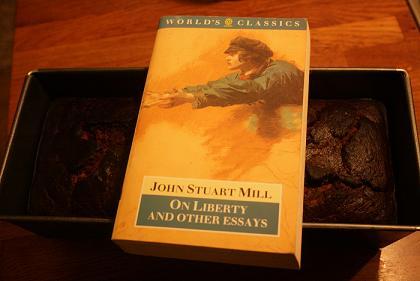 Sometimes we all have to make sacrifices…
From The Guardian
Just 42 minutes after the Guardian story was published, the internet had revealed what the paper could not.
Bloggers and the so-called Twitterati tonight claimed a historic victory for the power of the internet over what they saw as attempts by vested interests to shut down freedom of speech.
One of the quickest to reveal the full story was a 34-year old human rights activist, Richard Wilson. He was baking a banana cake in his kitchen in London when he first found out about the gag on the Guardian from a message posted on Twitter.
A few minutes of frantic internet searching later he published the fact that the gag related to Farrelly’s questions about Trafigura. He also published the text of the questions itself and became so absorbed in cracking the puzzle, his cake burned to a crisp. He said it was a small price to pay.
“I knew Trafigura were incredibly litigious and I knew Carter Ruck were defending them,” he explained. “I had a hunch, so I went to the website of the parliamentary order papers where they publish all the questions, searched for Trafigura and a question from Farrelly popped up and I tweeted it straight away. It took several tweets and then I pasted in the link.”
At 9.13pm he signed on to his Twitter account, printed the link to the Guardian report about the gag and wrote: “Any guesses what this is about? My money is on, ahem, #TRAFIGURA!”
By 9.30pm he had published all of Farrelly’s questions. He was not alone in trying to crack the puzzle. Paul Staines, the political blogger who uses the name Guido Fawkes, posted a blog making the link between the gag and Paul Farrelly’s questions just before 10pm.
From that point a torrent of references to the questions, the gag on the Guardian and Trafigura flooded out. According to Twitter at noon today, the three most popular search terms on the site were “outrageous gagging order trafigura dumping scandal”, “ruck” and “guardian”.
As exactly the publicity Trafigura was surely trying to avoid grew and grew, the Liberal Democrat leader, Nick Clegg, weighed in on Twitter at 10.01am stating: “Very interested concerned about this #trafigura / Guardian story the LibDems are planning to take action on this.”
Mainstream media, including the Spectator website also picked up the story with the thought: “It’s hard to recall, even in the long history of appalling gagging orders, a more disgraceful injunction than this.”
Satirists, such as Ian Martin, a writer on The Thick Of It, seized the opportunity to amplify the coverage that Trafigura was getting by repeating the company’s name again and again to ensure it became a “high trending” topic on Twitter.
During the morning, Private Eye was published and ran Farrelly’s questions in full as the first item on its politics page, although the bald presentation with no reference to the gagging order had long been superseded by the reports flowing across the internet.
All the while, efforts were continuing to persuade Trafigura to alter the terms of the order to allow the Guardian to report the parliamentary business, and at 12.19pm Carter Ruck emailed the Guardian agreeing to do so. In the end, the Twitterati claimed victory, led by one of its most popular users, the comedian Stephen Fry. “Can it be true?” he wrote. “Carter-Ruck caves in! Hurrah! Trafigura will deny it had anything to do with Twitter, but we know don’t we?”
NB – One crucial clarification – I’m ashamed to say that I had actually just been put in charge of minding the cake (and taking it out of the oven before it incinerated) after my wife went to bed. She has been very understanding…
UPDATE – By popular demand, here is the recipe for “Liberty Cake”: 9 bananas, 450g flour, 150g butter, 220g sugar, 2 eggs,1 lemon, tad lime juice, 4 tsp bicarb of soda. Mix. Bake to a crisp.
The “Minton Report” – is this the detail that Carter-Ruck wanted suppressed?
At first glance, it’s difficult to see why Trafigura’s lawyers Carter-Ruck would go to such trouble to get a media gag on Paul Farrelly MP’s Parliamentary Question about the press freedom implications of the Trafigura case. For the most part, the cat’s already out of the bag, and Trafigura (and Carter-Ruck) have already been roundly exposed for the [expletive of choice here]s they undoubtedly are.
But there is one detail in the banned Parliamentary question that seems mysteriously un-reported in the UK media: Paul Farrelly’s reference to “the Minton report”. No UK news article on Trafigura makes any mention of this report, but you can find some references to it in the non-UK press.
Fortunately, by the power of wikileaks (and the sleuthing of @csdenton) you can read the report here.
The existence of the Minton report, which was given to Trafigura in 2006 but only recently disclosed, suggests that, despite their denials, the company may in fact have been aware from an early stage that the cargo of waste that ended up getting dumped in Ivory Coast was highly toxic.
Trafigura now seem so keen on suppressing this information that they (and Carter-Ruck) have attempted to gag the UK media from reporting proceedings at the heart of our democracy in order to stop the truth from getting out.


 Richard Wilson's blog